
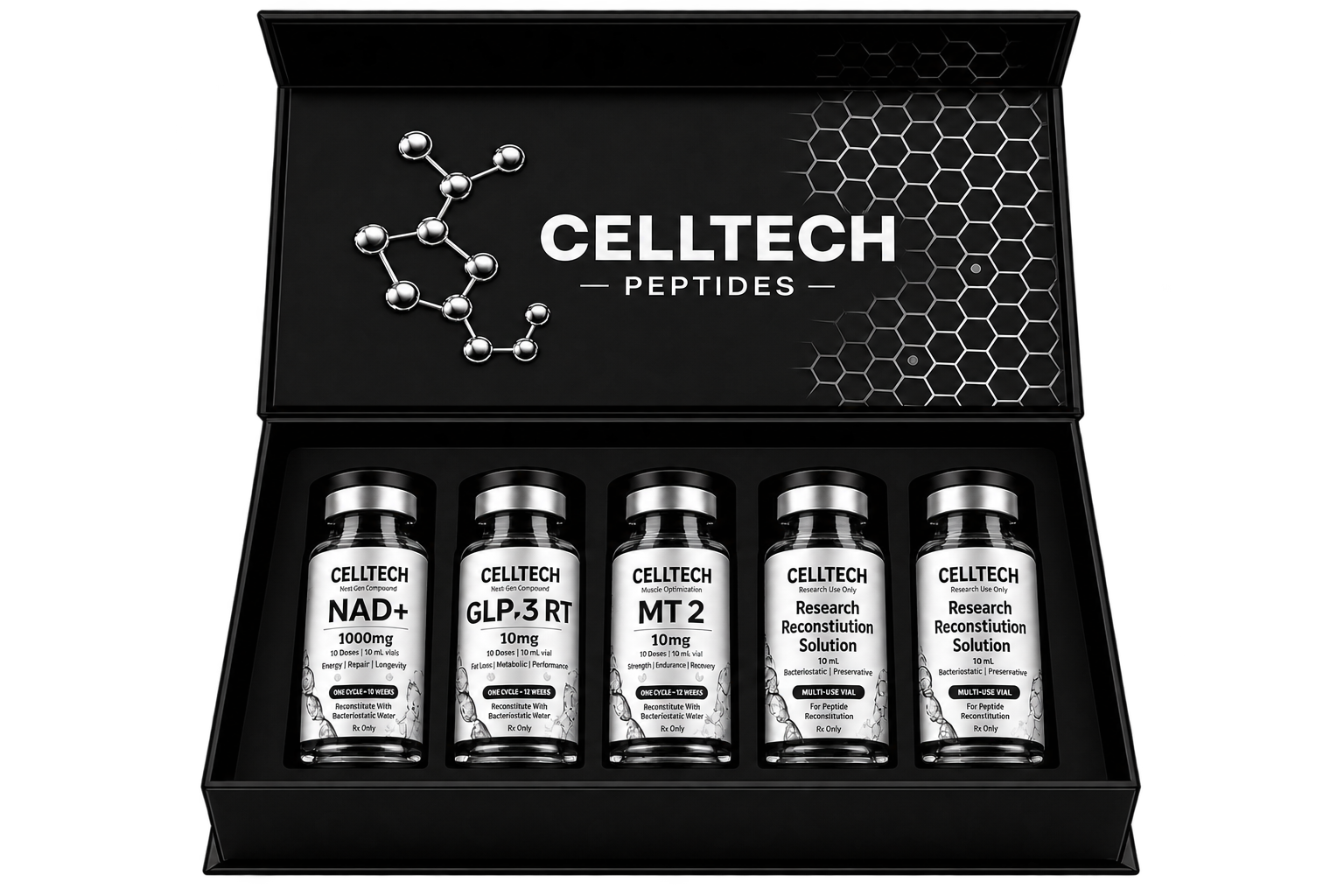
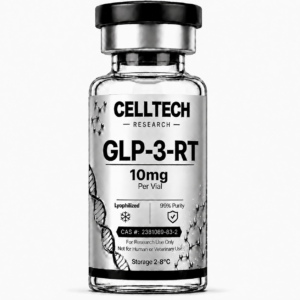
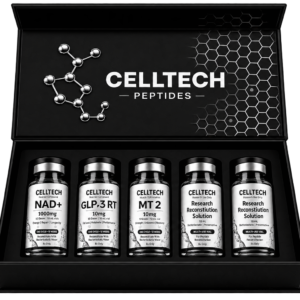
GLP-3-RT is an investigational research compound studied within the fields of metabolic biology, receptor signaling, energy regulation, glucose-response pathways, and multi-agonist peptide research.
GLP-3-RT has generated scientific interest because of its activity across multiple metabolic receptor pathways. Laboratory and preclinical research involving multi-receptor agonist compounds examines how coordinated signaling may influence cellular communication, nutrient-response mechanisms, metabolic regulation, energy balance, and related biochemical pathways under controlled experimental conditions.
Researchers may use GLP-3-RT as a model compound when investigating the relationship between peptide-receptor activation and complex metabolic signaling networks. These studies may include evaluation of receptor interactions, molecular signaling cascades, cellular responses, and other mechanisms associated with metabolic research.
Research involving GLP-3-RT remains investigational, and findings from laboratory or preclinical models should not be interpreted as establishing safety, efficacy, or therapeutic outcomes in humans.
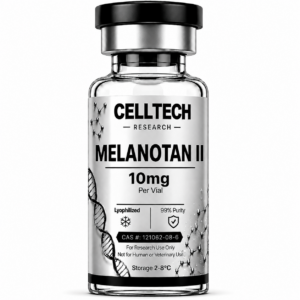
Melanotan II (MT-2) is a synthetic investigational peptide studied within the fields of melanocortin receptor biology, pigmentation signaling, cellular communication, and neuroendocrine research.
Laboratory research involving Melanotan II has focused on its interaction with melanocortin receptors, a family of receptors involved in several biological signaling systems. Experimental models have examined receptor activation, intracellular signaling, melanogenesis-related pathways, and cellular responses associated with melanocortin biology.
Melanotan II is also studied as a research tool for investigating how melanocortin receptor signaling may interact with broader neuroendocrine, metabolic, and cellular regulatory mechanisms. These investigations are performed under controlled laboratory or preclinical conditions and do not establish corresponding effects or outcomes in humans.
The compound remains investigational and is intended to support controlled scientific study of peptide-receptor interactions and related molecular pathways.
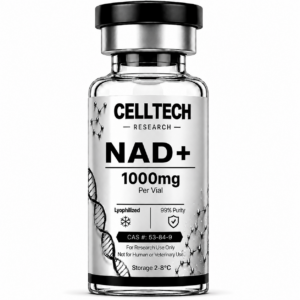
Nicotinamide Adenine Dinucleotide (NAD+) is a naturally occurring cellular coenzyme extensively studied within the fields of cellular metabolism, mitochondrial biology, energy production, redox signaling, DNA-associated processes, and cellular aging research.
NAD+ plays an important biochemical role in oxidation-reduction reactions involved in cellular energy metabolism. Laboratory researchers study NAD+ in connection with mitochondrial function, ATP-related metabolic pathways, cellular stress responses, enzymatic activity, and intracellular signaling.
Scientific research has also examined NAD+ as a substrate for several enzyme families, including sirtuins, PARPs, and other NAD+-dependent enzymes, making it an important research compound for investigating metabolic regulation, DNA-associated signaling, cellular maintenance, and age-related biological processes.
Research involving NAD+ continues across cellular, biochemical, and preclinical models. Experimental findings should not be interpreted as establishing therapeutic effectiveness, medical benefits, or clinical outcomes in humans.
Research Use Disclaimer:
This product is sold strictly for laboratory research, analytical, and educational purposes only. It is not intended for human or veterinary use, consumption, injection, diagnosis, treatment, cure, or prevention of any disease or medical condition. Purchasers are responsible for appropriate handling and compliance with all applicable laws and regulations.
Reviews
There are no reviews yet.